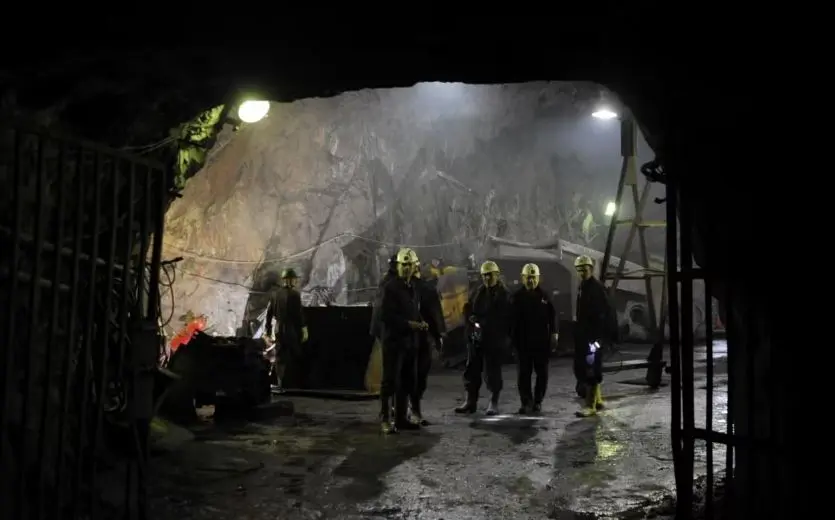
The Heart of Kosovo’s Economy
Nestled in the rugged landscape of Kosovo, the Trepca mining complex has long been a vital component of the country’s economy. Known for its rich reserves of lead, zinc, and silver, Trepca’s operations have contributed substantially to local livelihoods and the national economy. However, the mine’s legacy is entwined not only with resource extraction but also with a web of political intrigue and historical disputes.
A Historical Overview
Established in the 1920s, the Trepca mine flourished during the Yugoslav era, becoming one of the largest industrial complexes in the region. However, the Balkan Wars and subsequent Kosovo conflict in the late 1990s left Trepca in a state of disrepair. The mine’s operations were suspended, and its infrastructure rapidly deteriorated. In the wake of war, Kosovo declared independence in 2008, further complicating the fate of Trepca.
Current Political Climate and Economic Value
Today, Trepca remains a focal point in the ongoing tug-of-war between local aspirations and international interests. The mine’s potential closure or operational changes could jeopardize around 2,000 jobs, making it a critical economic lifeline in a region struggling with high unemployment rates. “Trepca is not just a mine; it’s a symbol of economic hope for many families in Kosovo,” said Dr. Agon Zeqa, an economist specializing in Balkan resource management. “The government needs to find a sustainable path forward.”
Environmental Concerns and Social Media Sentiment
This appeal for sustainability is echoed by environmental activists, who voice concern over the ecological impact of mining operations. Recent social media discussions have highlighted the dichotomy between job creation and environmental responsibility. Tweets showcasing the mine’s picturesque mountains juxtaposed with images of industrial waste have sparked heated debates online. Some social media users argue that the economic benefits of mining should not trample on the environmental cost, while others emphasize the urgent need for jobs in the community.
Prospective Pathways and International Interest
As the political atmosphere surrounding Trepca thickens, international stakeholders are re-engaging with the mine. The potential for private sector investments is being explored, but these come with their own sets of risks and conditions. If a resolution can be reached that aligns economic interests with environmental protections, Trepca could serve as a leading model for sustainable mining practices in the Balkans.
A Stake on the Future
The future of Trepca is not merely a local concern; it serves as a microcosm of the broader challenges facing post-conflict societies. Balancing economic development with responsible resource management and political stability will be essential in guiding Kosovo toward a productive future. As Dr. Zeqa aptly noted, “Navigating Trepca’s future will require a collaborative effort among all stakeholders—government, industry, and community—to ensure a balanced approach.” With the backdrop of economic necessity and political complexity, Trepca remains a pivotal issue that will shape the landscape of Kosovo for years to come.