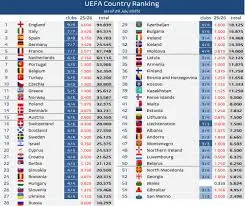
The Game Behind the Rankings
For most football fans, every match week brings not just the thrill of the game but also the nerve-wracking anticipation of how their favorite teams will fare in the UEFA Ranking. This ranking system, which evaluates clubs primarily based on their performance in UEFA competitions over a ten-year period, is often seen as a reflection of a club’s strength, reputation, and potential for European success.
The Numbers Tell a Story
The UEFA ranking plays an influential role in determining not just which clubs qualify for prestigious tournaments but also how those clubs are seeded during draws. Clubs with higher rankings enjoy the benefits of facing theoretically weaker opposition in early rounds, which can have monumental implications for their progression in competitions. Recent statistics from the 2022-2023 season show that around 80% of the clubs that advanced to the knockout stages of the UEFA Champions League were ranked in the top 20. Such figures suggest that the ranking can significantly predict teams’ fortunes in European tournaments.
A Reflection of Performance or a Source of Anxiety?
Fans and analysts often debate the true value of the UEFA rankings. On social media, sentiments oscillate between satisfaction and frustration. Many fans of clubs that experience late-season surges point to their success as an argument against the rigidity of rankings. “It’s tough to accept that we are judged on past performances, especially in a league where the quality can change so rapidly,” said Liam Santorini, a die-hard supporter of a mid-tier club that recently rose through the ranks of domestic competition. “It feels like a glass ceiling for us sometimes. But at the same time, I understand how it benefits clubs with a more stable history. It’s complicated!”
The Broader Impact on Football Culture
Beyond the numerical implications of the UEFA ranking, it also deeply influences club cultures across Europe. Teams invest millions in their squads to break into higher tiers of the rankings. This obsession can lead to a toxic atmosphere at clubs, where every loss feels like a setback in their quest for prestige. Players under such pressure often admit to feeling the weight of their club’s historical success or failure on their shoulders.
Moreover, the rankings also affect recruitment strategies. Clubs are more likely to attract high-profile players if they sit comfortably within the top echelons of the UEFA ranking. A player’s choice can hinge on which clubs are regularly competing in European competitions, widening the gap between elite clubs and those struggling to climb the ranks.
A Future of Evolution
As European football continues to evolve, so too will perceptions of the UEFA ranking. UEFA recently announced proposed changes to the ranking system to reflect the modern game’s variations, taking into account factors such as financial stability and nurturing of local talent.
The UEFA ranking isn’t just numbers; it encapsulates the hopes, dreams, and challenges of clubs across Europe, influencing decisions from boardrooms to the terraces. For fans, it’s a constant reminder of both the legacy of their teams and the uphill journey that lies ahead in an ever-competitive landscape.