Growing Strains in Diplomacy
Just days after Greek Prime Minister Kyriakos Mitsotakis held a summit with Israeli officials, an unexpected diplomatic rift has emerged, casting uncertainty over the future of Greece-Israel relations. The escalating tension comes in the wake of renewed hostilities in the Eastern Mediterranean, where both countries find themselves navigating a complex web of alliances and rivalries.
Recent Developments and Context
The backdrop to this sudden diplomatic strain is marked by an increase in military operations along Israel’s northern border and ongoing territorial disputes between Turkey and Greece in the Aegean Sea. As rhetoric intensifies, officials from both countries have been quick to comment, with one Israeli diplomat stating, “We need our allies to stand firm, but it seems some are more interested in local politics than in supporting democratic values.”
Last week, Greece condemned recent military actions undertaken by Israel against Palestinian territories, a move that shocked many observers given the historically close ties between Athens and Jerusalem. While Greece has positioned itself as a mediator in the ongoing Israeli-Palestinian conflict, this latest development has ignited public debate at home, with citizens vocalizing both support and dissent for their government’s newfound stance.
Public Reaction and Social Media Sentiment
The reaction on social media has been swift and polarized. A recent poll conducted by the Greek ministry of public opinion revealed that 62% of Greeks support maintaining a strong alliance with Israel, while 38% expressed growing concern over the human rights implications of that relationship. Hashtags like #GreeceStandsWithIsrael and #GreeceForPeace have trended in recent days, reflecting the nation’s divided sentiment.
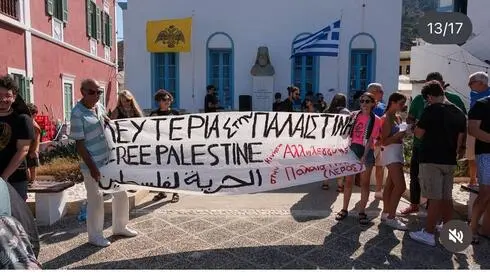
Greek citizens have taken to the streets to protest the government’s policies, gathering outside the Israeli embassy in Athens to voice their opposition to the ongoing conflict in Gaza. Meanwhile, pro-Israel demonstrations have also taken place, showcasing the conflicting views within the public sphere.
The Road Ahead
Looking forward, the future of Greece-Israel relations hangs in the balance amid this tumultuous backdrop. Analysts warn that if diplomatic dialogues do not resume soon, both nations could find themselves at a diplomatic impasse, impacting not just bilateral ties but also the stability of the region as a whole.
As political leaders scramble to address the growing discontent, it’s clear that the relationship between Greece and Israel will require a recalibration of strategies. In a recent statement, the Greek Ministry of Foreign Affairs reiterated the importance of dialogue, stressing that “collaboration can lead to stability and peace,” but only if both sides remain committed to understanding each other’s perspectives.
A Divided Future?
As tensions continue to rise and the international community watches closely, the repercussions of Greece’s shifting stance on Israel remain uncertain. Public sentiment, government diplomacy, and regional geopolitics will undoubtedly play a critical role in shaping the future of both nations. With the specter of conflict looming, the hope for peace and collaboration is increasingly fragile, challenging leaders on both sides to act decisively, or risk long-lasting divisions.