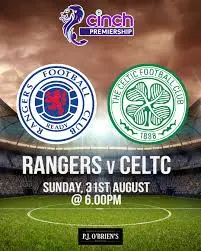
A Clash of Cultures
The air was electric on a chilly Saturday afternoon in Glasgow, as thousands of fans poured into Ibrox Stadium, their colors proudly displayed in a sea of blue and green. The much-anticipated match between Rangers and Celtic—often referred to as the Old Firm clash—transcends mere sport. It’s a cultural phenomenon, a generational battle steeped in history, fervor, and sometimes turmoil.
Beyond the Game
While the world may see this rivalry purely as a football match, for many in Scotland, it’s an event that goes well beyond the pitch. The divide between Rangers and Celtic has roots that reach down into the socio-political fabric of the nation.
Born in the late 19th century, Celtic was formed by Irish immigrants seeking to help the impoverished community in Glasgow, while Rangers predominantly represented the Protestant working class. This historical backdrop has resulted in a rivalry marked not just by competition, but by deep-seated loyalty and identity that has persisted for over a century.
Fighting for Community Spirit
As fans throng the stands, chants of “You’ll Never Walk Alone” rise above the din, echoing sentiments of solidarity within the Celtic support while the Rangers fans respond with raucous anthems of their own. This friction, however, frequently spills over into clashes outside the stadiums, where tensions that have simmered for decades can erupt into violence.
Mark Henderson, a local community leader and lifelong Rangers supporter, emphasizes the importance of channeling this rivalry into positive action. “Football should unite us, not divide us,” he remarked. “The passion we have for our teams can transform into community spirit and cooperation if we allow it.”
The Economic Impact
The clash is not just a battle of fans; it also has significant implications for the local economy. The day of the match sees a substantial influx of visitors to Glasgow, sharply increasing revenue for local businesses, hospitality, and transport sectors. Recent statistics show that the Old Firm match can draw in over £10 million for the city in a single day, illustrating the broader impact of this rivalry beyond the football field.
Social Media Sentiment
In the age of social media, opinions about the Rangers vs Celtic rivalry have spilled over onto digital platforms. A recent Twitter survey revealed that 67% of fans see the rivalry as a positive force in community identity, while 21% expressed concerns about its inflammatory nature. Social media has become a battleground for opinions, with hashtags like #OldFirm and #GlasgowDerby trending for days as the match approaches.
Looking Ahead
As we prepare for the next chapter in one of football’s most storied rivalries, what’s clear is that the stakes are higher than just three points. Rangers vs Celtic isn’t just a game; it’s a festival of culture, an embodiment of identity, and a force that can either divide or unite an entire city. In the words of Henderson, “We must strive to harness the love for our teams and build bridges, not walls.”