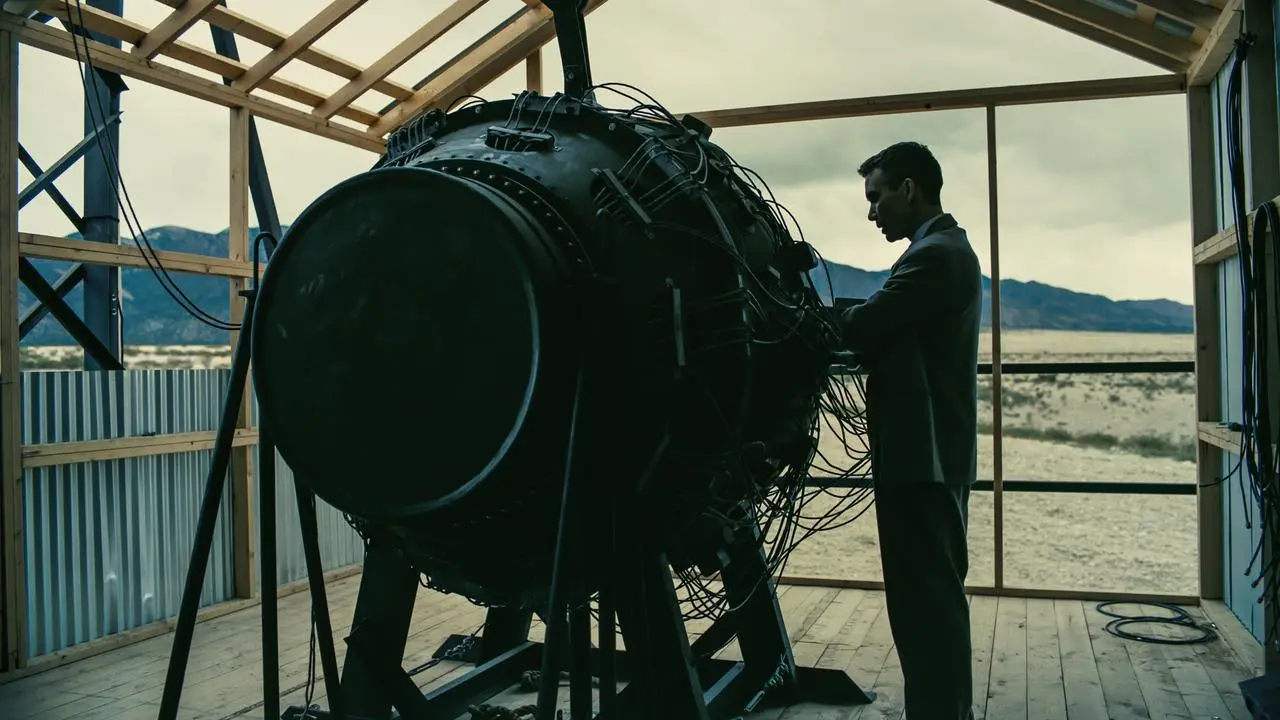
Introduction: The Man Behind the Bomb
The name Oppenheimer resonates through the corridors of history, invoking images of brilliant science and harrowing ethical dilemmas. J. Robert Oppenheimer, the man often referred to as the father of the atomic bomb, played an integral role in one of humanity’s most pivotal scientific advancements. Yet, this title comes with a weight of moral inquiry, raising the question: what is the true legacy of this scientific luminary?
Oppenheimer’s Journey to the Atomic Age
Born in 1904 in New York City, Oppenheimer’s scholarly pursuit led him to study at Harvard University and later at the University of Göttingen. His work in theoretical physics positioned him as a prominent figure in the scientific community by the late 1930s. As World War II escalated, the urgency for an atomic weapon prompted the establishment of the Manhattan Project, a top-secret initiative that sought to harness nuclear fission for military use. Oppenheimer was appointed as the scientific director, a role that required him to lead a team of elite scientists in a monumental endeavor.
The Ethical Brink
At Trinity Test on July 16, 1945, Oppenheimer witnessed the successful detonation of the first atomic bomb. His timeless remark, drawing upon sacred texts, was, “Now I am become Death, the destroyer of worlds.” This moment encapsulated the duality of scientific achievement and moral burden that would haunt Oppenheimer for the rest of his life. Although he played a critical role in ending the war, the immediate aftermath of Hiroshima and Nagasaki raised urgent ethical questions about the use of such destructive technology.
A Divided Public Reaction
In contemporary society, Oppenheimer’s legacy continues to spark fierce debate. Recent statistics indicate that nearly 60% of Americans believe that the atomic bomb was justified to end World War II, while about 40% view it as an inhumane act unleashing suffering on civilians. Social media reactions echo this divide: platforms like Twitter are abuzz with posts ranging from admiration for Oppenheimer’s genius to scathing critiques of his role in the creation of such devastating weaponry.
Expert Opinions on Oppenheimer’s Impact
Philosopher and ethical theorist Dr. Emily Sanders observed, “Oppenheimer embodies the paradoxes of modern science: our capacity for innovation is matched only by our potential for destruction. We must wrestle with his legacy, not just as a historical figure, but as a cautionary tale for future generations.” This sentiment underscores the importance of reflecting on Oppenheimer’s contributions, as they provoke discussions surrounding scientific responsibility.
Conclusion: Lessons for the Future
The enduring legacy of Oppenheimer is a complex tapestry intertwined with human curiosity and ethical compromise. As we continue to grapple with modern scientific advancements—from artificial intelligence to biotechnology—Oppenheimer’s story serves as a poignant reminder. His life invites us to ask the difficult questions, weighing the benefits of scientific progress against the moral implications of its application. Ultimately, Oppenheimer’s journey is not just a reflection of his time, but a lens through which we consider our future.